Found the Leak. Fixed the Checkout.
HansVoortman.nl is a premium Dutch fashion retailer. Strong brand. Loyal customers. A high satisfaction score. A mobile conversion rate that beats industry benchmark.
The store was performing. The data told a different story underneath: the checkout was leaking buyers at the worst possible moment.
I found the leak. Then I fixed it.
The brief
HansVoortman came in for a Research Complete: a full CRO and UX analysis across GA4 data, Clarity session recordings, funnel analysis and a page-by-page audit of five key areas of the site.
The goal was a clear, prioritized answer to one question — where exactly is this store leaving money on the table?
Months of analytics. Five audited page types. Dozens of session recordings studied. One structured action plan. And once the research was done, a full checkout redesign to turn the findings into something shippable.
The key finding — the payment step
The most urgent problem in the store sat at the payment step. A meaningful share of buyers who reached it didn't complete — across mobile, desktop and tablet — well above what's normal for e-commerce.
The causes compound. Shipping costs surface too late in the flow. Payment-method surcharges only show up at the moment of selection. Preferred methods like iDEAL aren't visually prioritised. The form adds friction at the point of maximum intent.
Highest priority in the entire report. The one I redesigned.
The checkout redesign
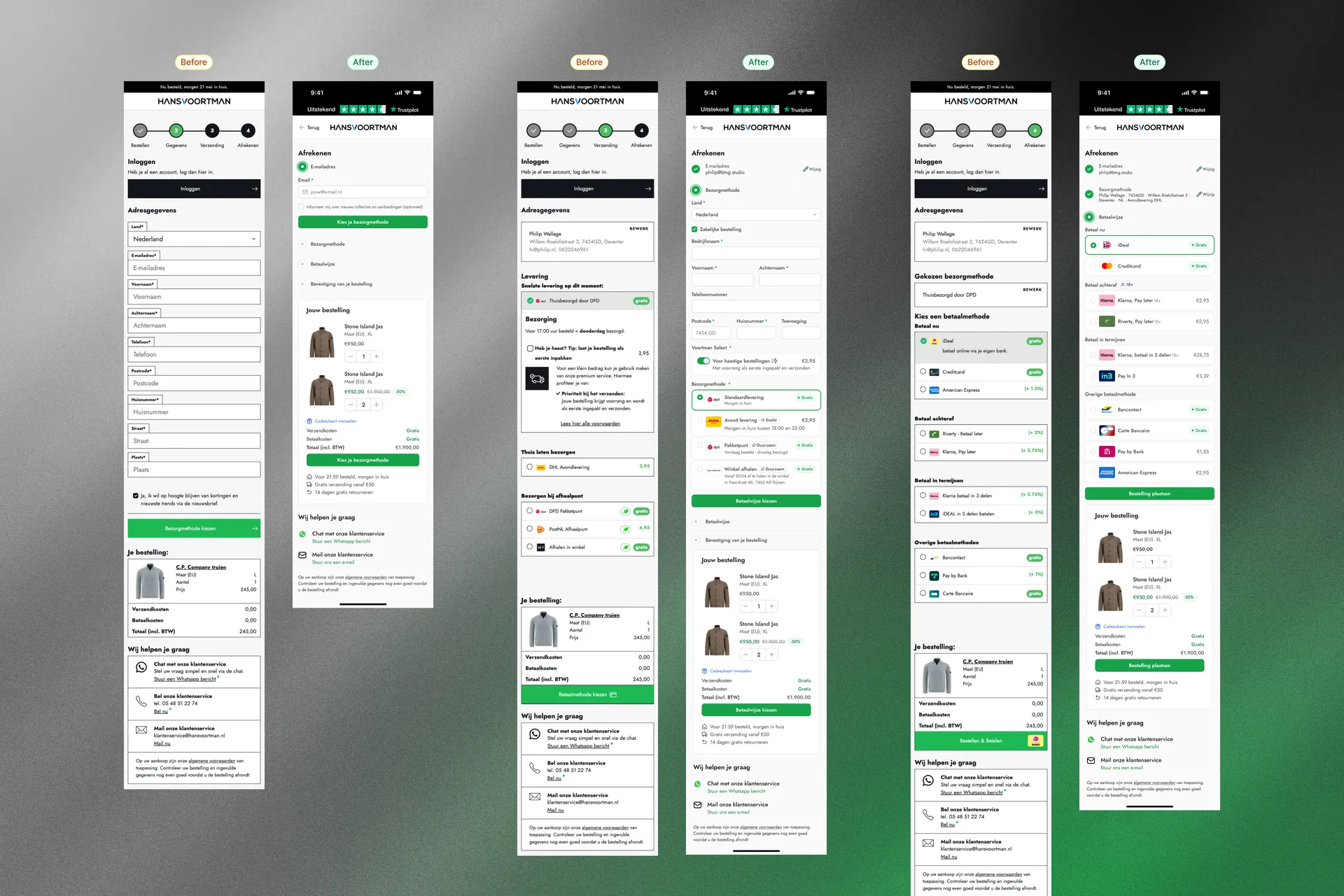
The research pointed to one root cause behind the payment-step failure: a cascade of small transparency failures across three consecutive steps. Each one individually manageable. Together, they kill intent.
Step one made buyers log in before they could even start. Step two defaulted to a paid delivery upgrade buried in a wall of explanatory text. Step three presented ten payment methods across four categories, with surcharges shown only on selection. The redesign rebuilds all three around a single principle: no surprises, no friction, nothing asked before it's needed.
Just an email — no login wall
The old flow opened with a login wall and a full address form before anyone could begin. The redesign asks for one thing: an email address. Guest checkout is the default. If the email already belongs to an account, an inline prompt offers to log in — never a forced detour. Account creation is deferred entirely until after the order is placed, so no one is asked to invent a password mid-purchase. Shipping is shown as free in the order summary from the very first screen.
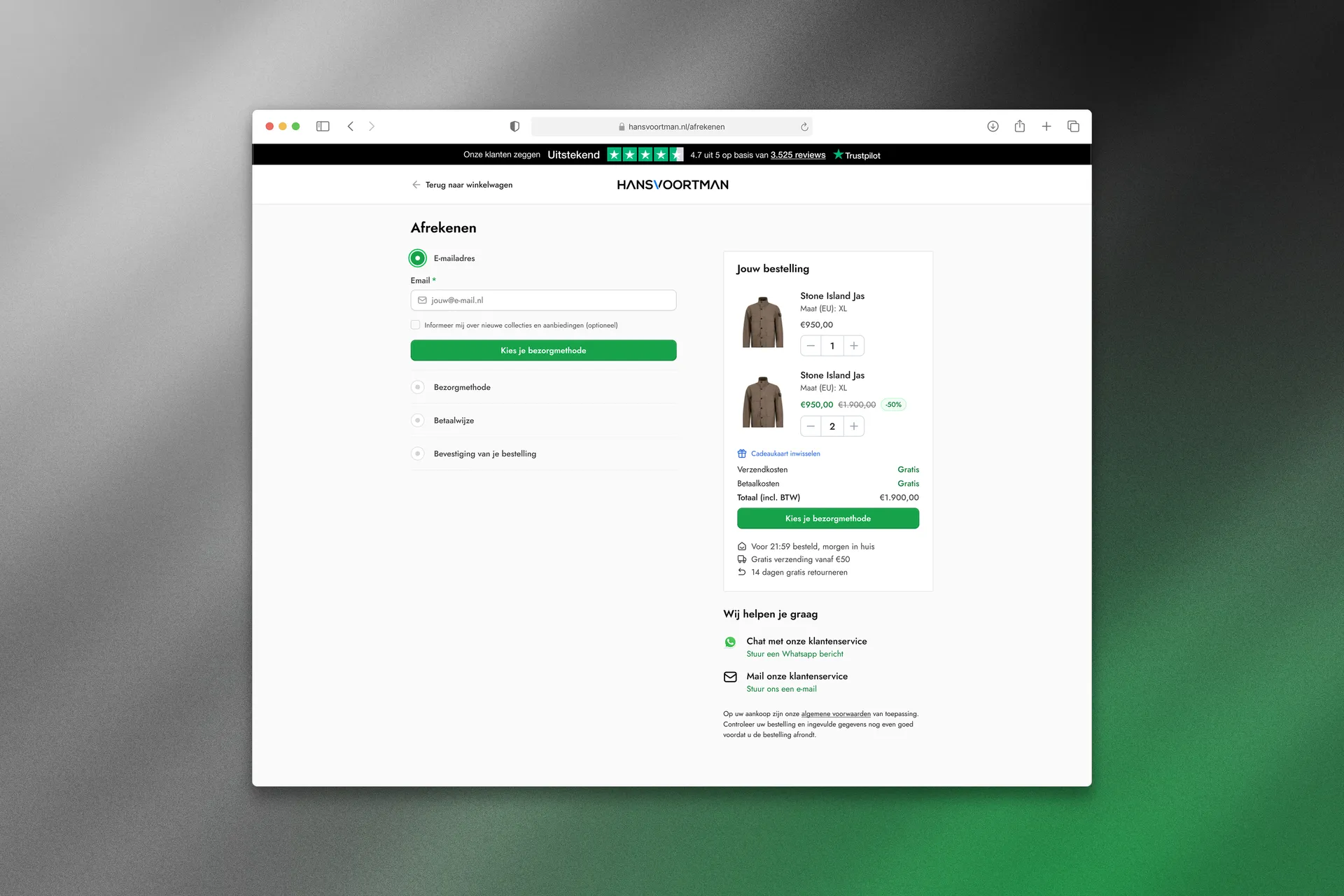
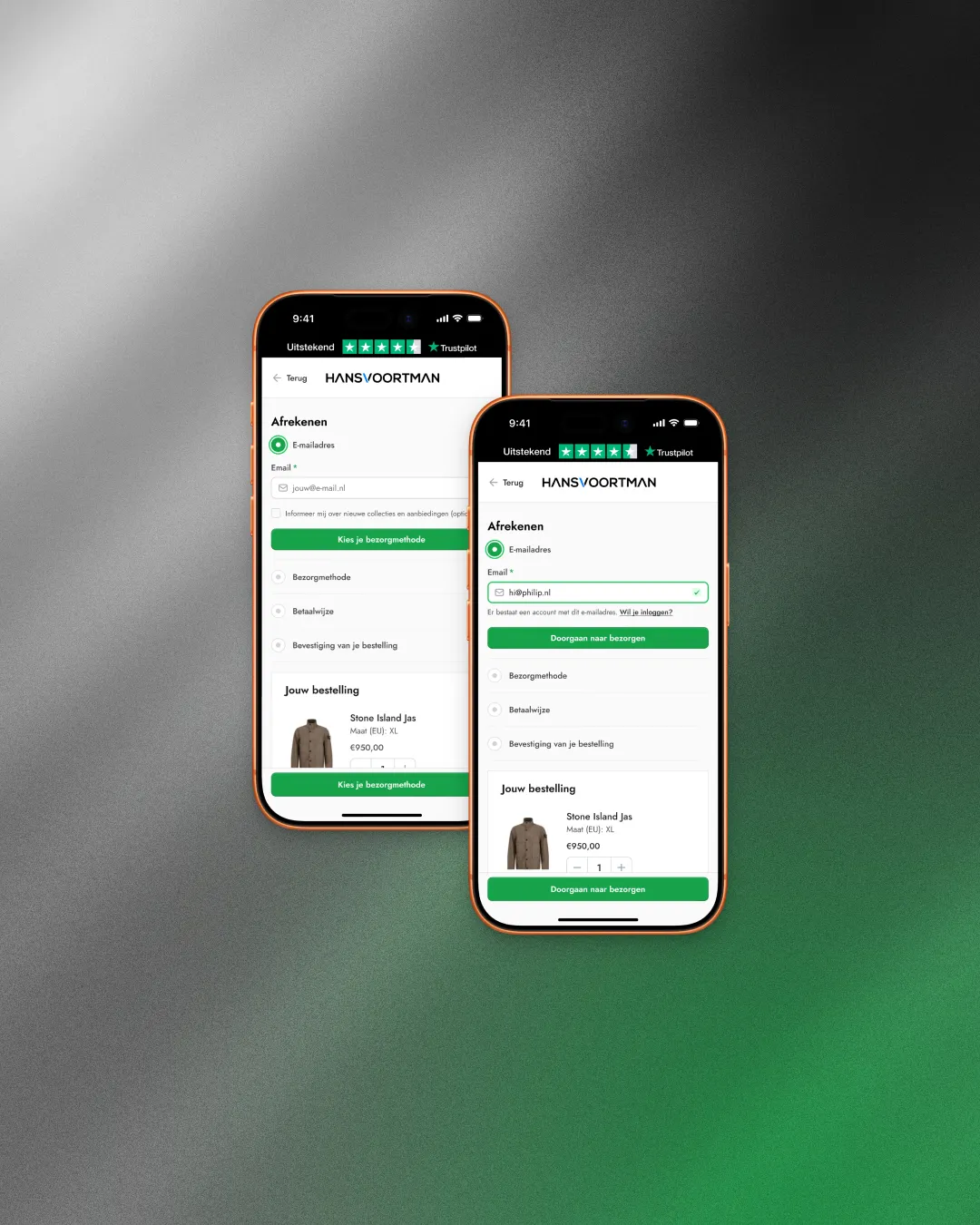
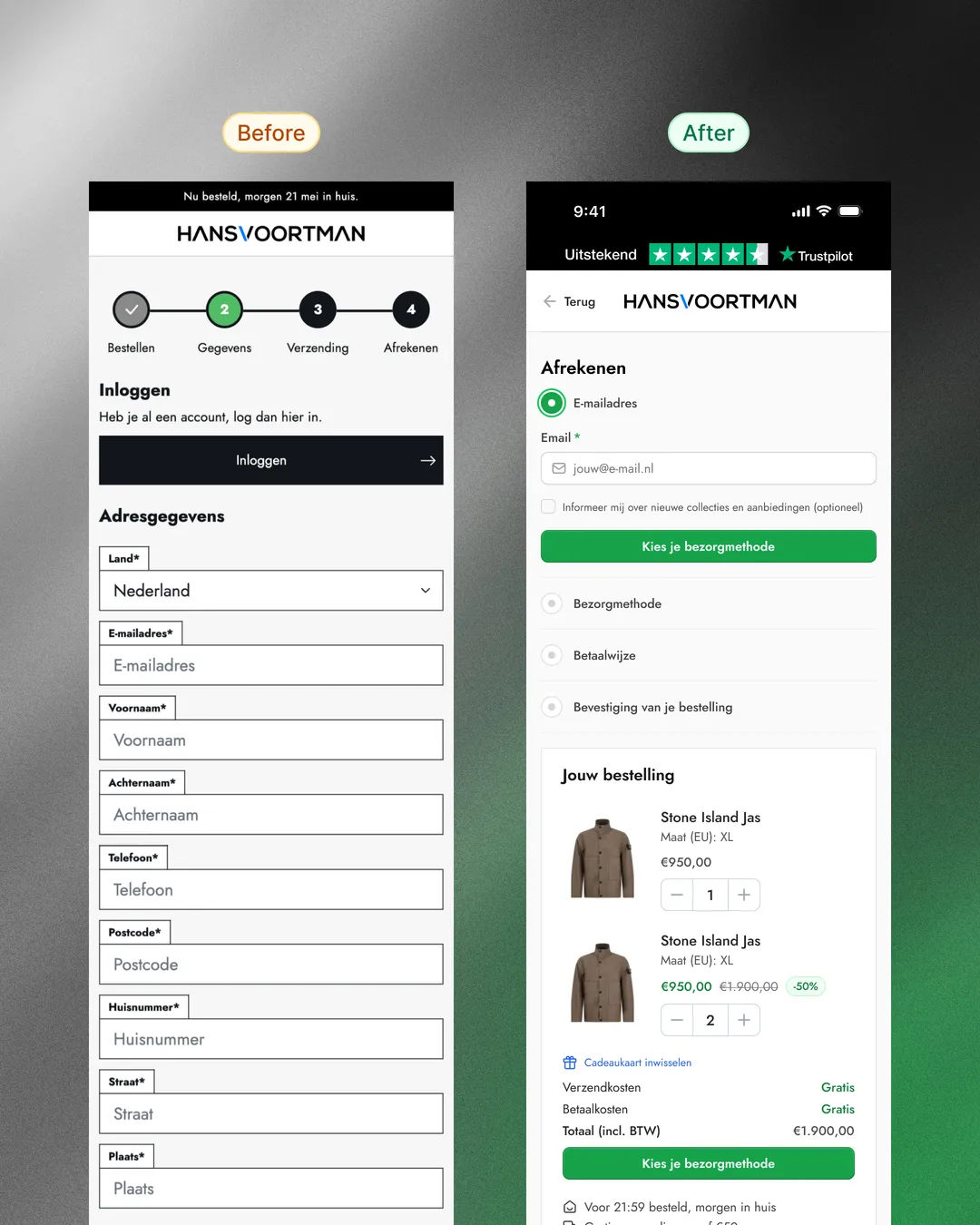
Forcing login or account creation at the entry point is one of the most-cited causes of checkout abandonment. By reducing step one to a single email field and deferring account creation to after the thank-you page, we expect more buyers to start and complete the checkout — without losing account sign-ups, just relocating the ask to a moment with nothing left to lose.
Delivery — simplified, every option priced
The old delivery step was a wall: a dense priority-packing card thick with conditions, a paid upgrade pre-selected by default, and several separate groups of delivery options. The redesign strips it back. The "Voortman Select" priority option becomes an explicit opt-in, not a silent default. Delivery choices are merged into one clearly-priced list — free options labelled, paid options showing their exact cost. The delivery promise is now a plain "tomorrow in-house" instead of a paragraph of cut-off times. A business toggle reveals a single company-name field for B2B buyers without cluttering the default path.
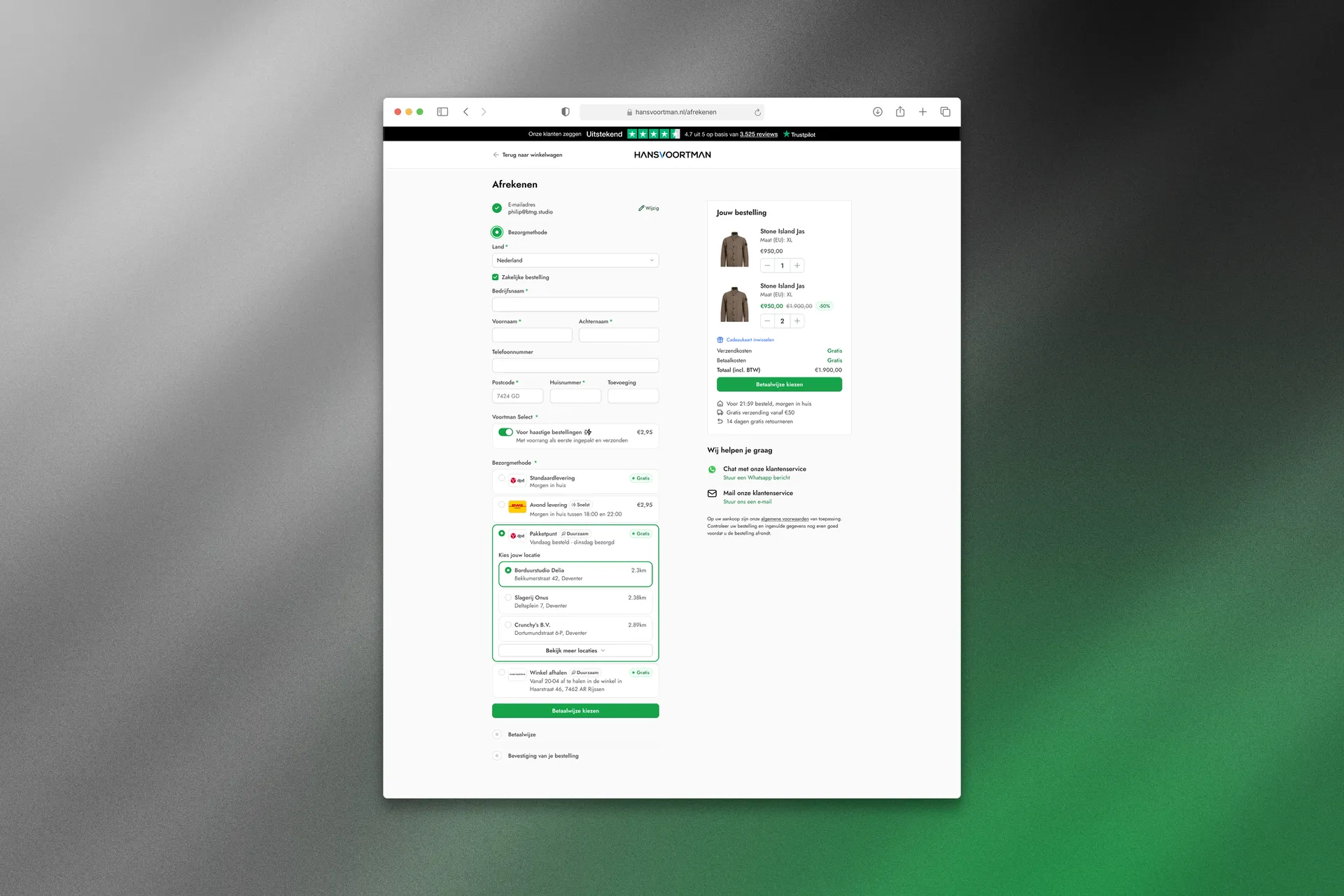
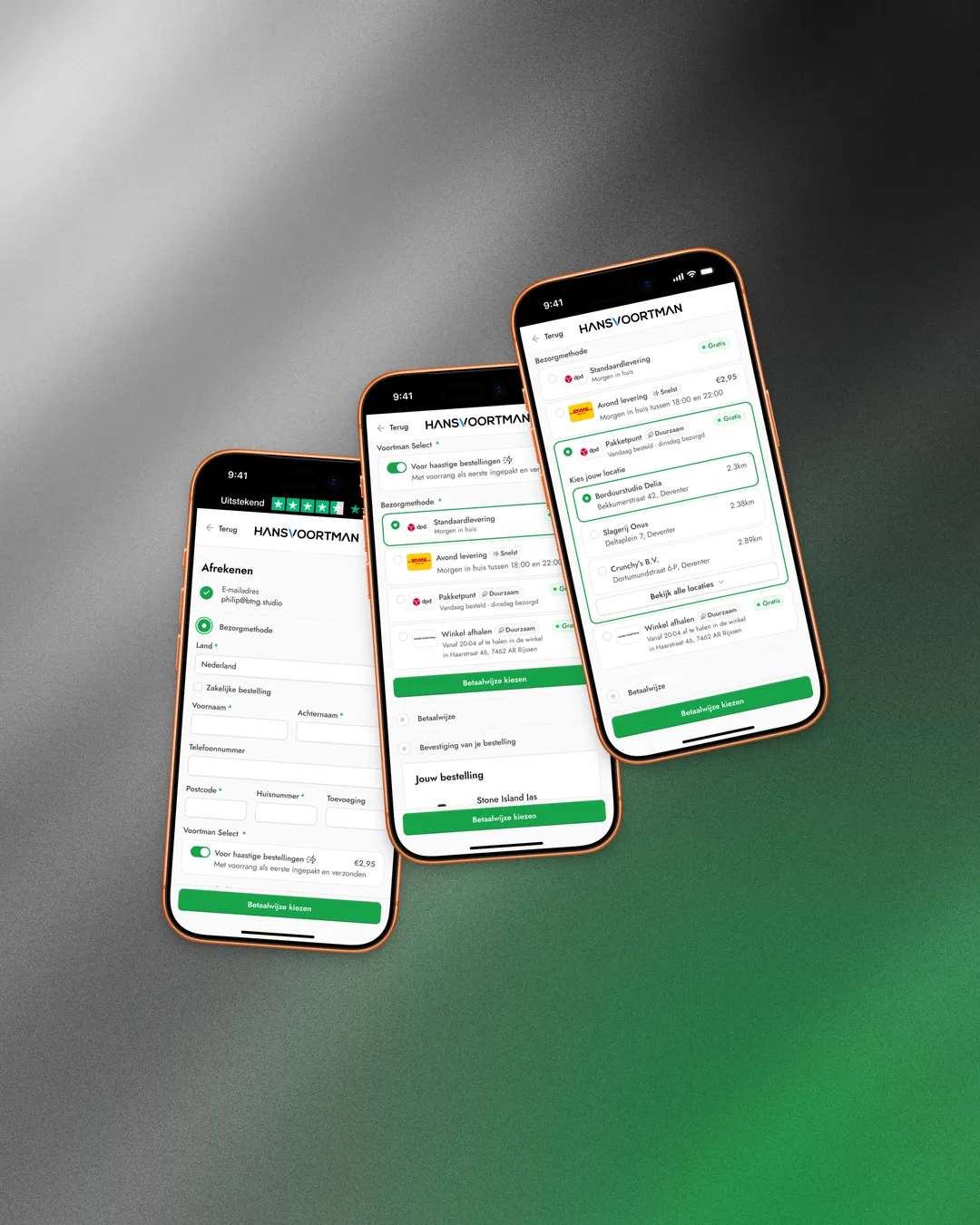
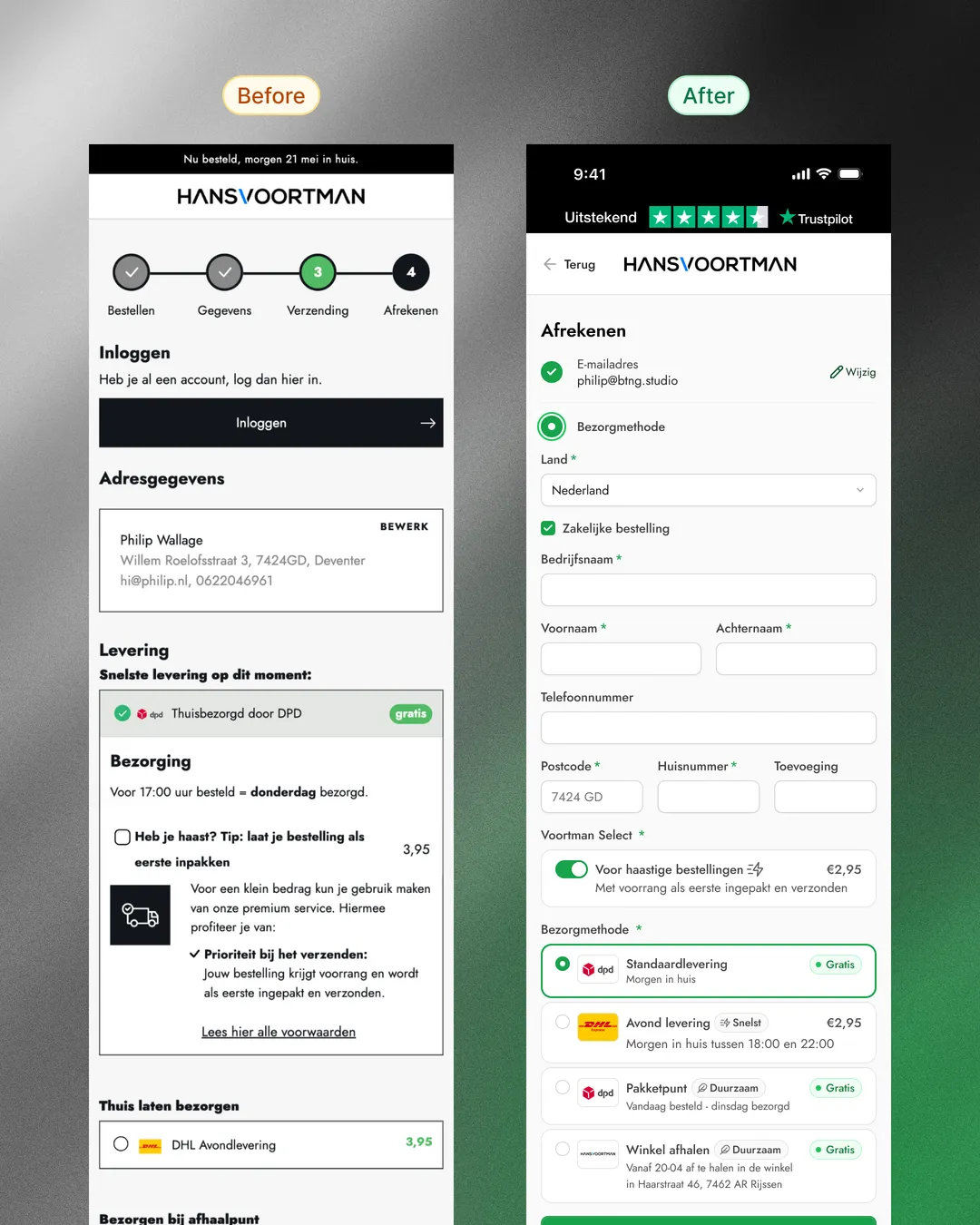
A paid delivery upgrade selected by default creates a surprise cost that erodes trust right before payment. By making priority packing an explicit opt-in and flattening delivery into one transparently-priced list, we expect lower step-two drop-off and fewer abandonments caused by unexpected cost — while the business toggle captures B2B orders without taxing the default consumer flow.
Payment — three groups, no surprises
This is the step the research flagged as the single biggest leak. Ten payment methods, previously scattered across four categories with surcharges hidden until selection, are reorganised into three intuitive groups: Pay now (iDEAL, credit card — both free, iDEAL prioritised), Pay later and Pay in installments (Klarna, Riverty, Pay in 3 — every surcharge shown upfront as an exact amount). Buy-now-pay-later options carry a clear 18+ indicator, and the date-of-birth field is gone: age verification now happens on Klarna's or Riverty's own pages, not in the checkout.
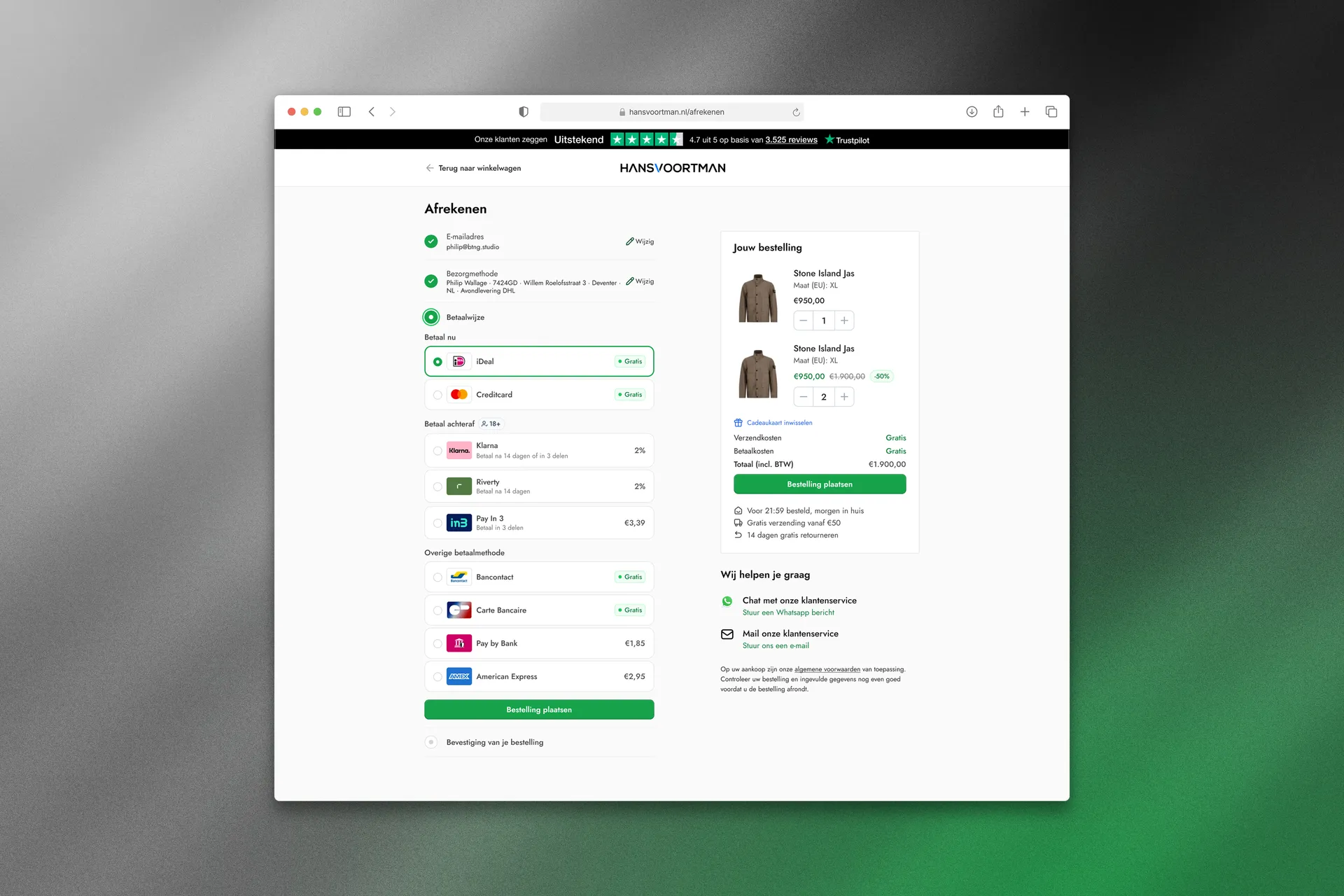
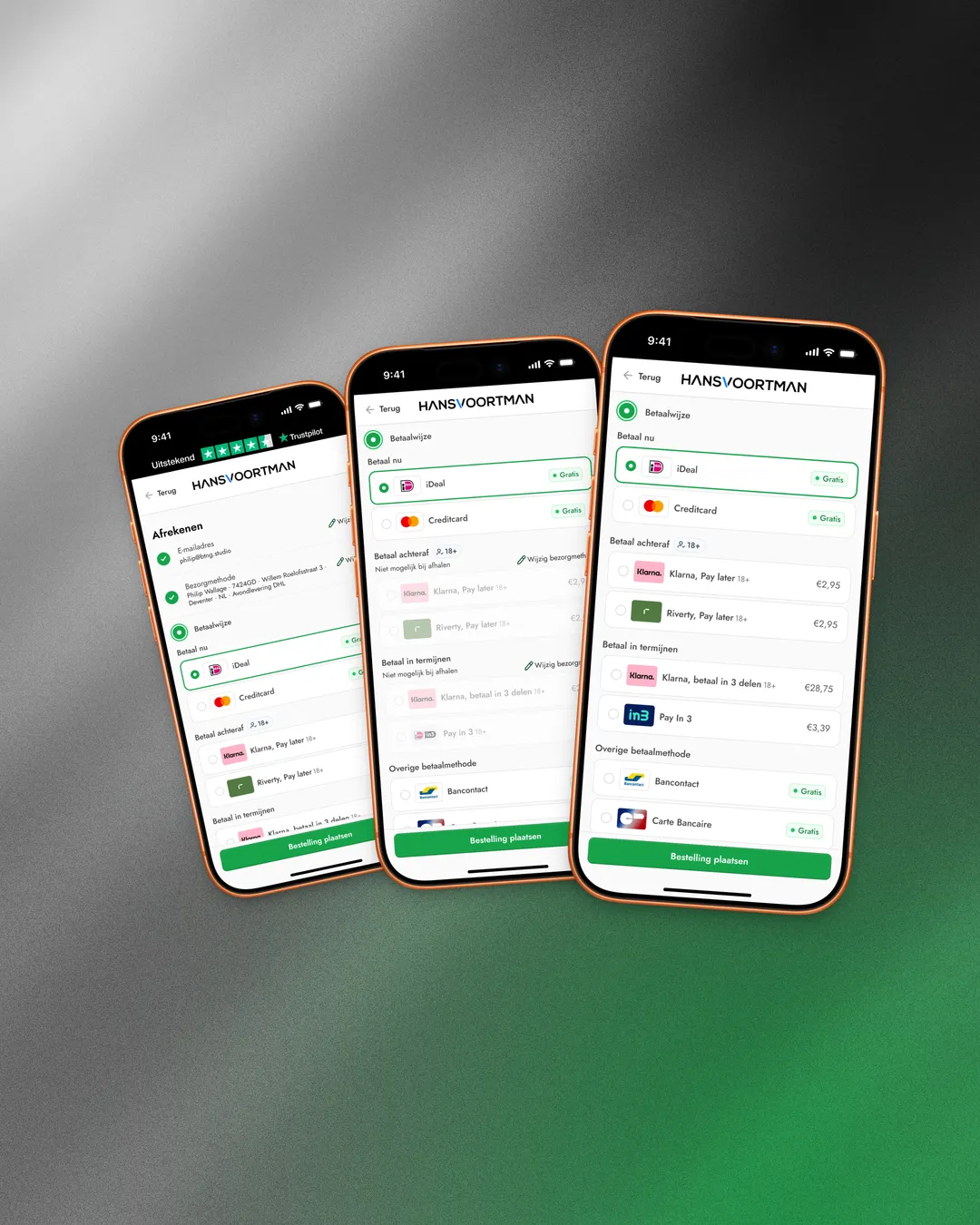
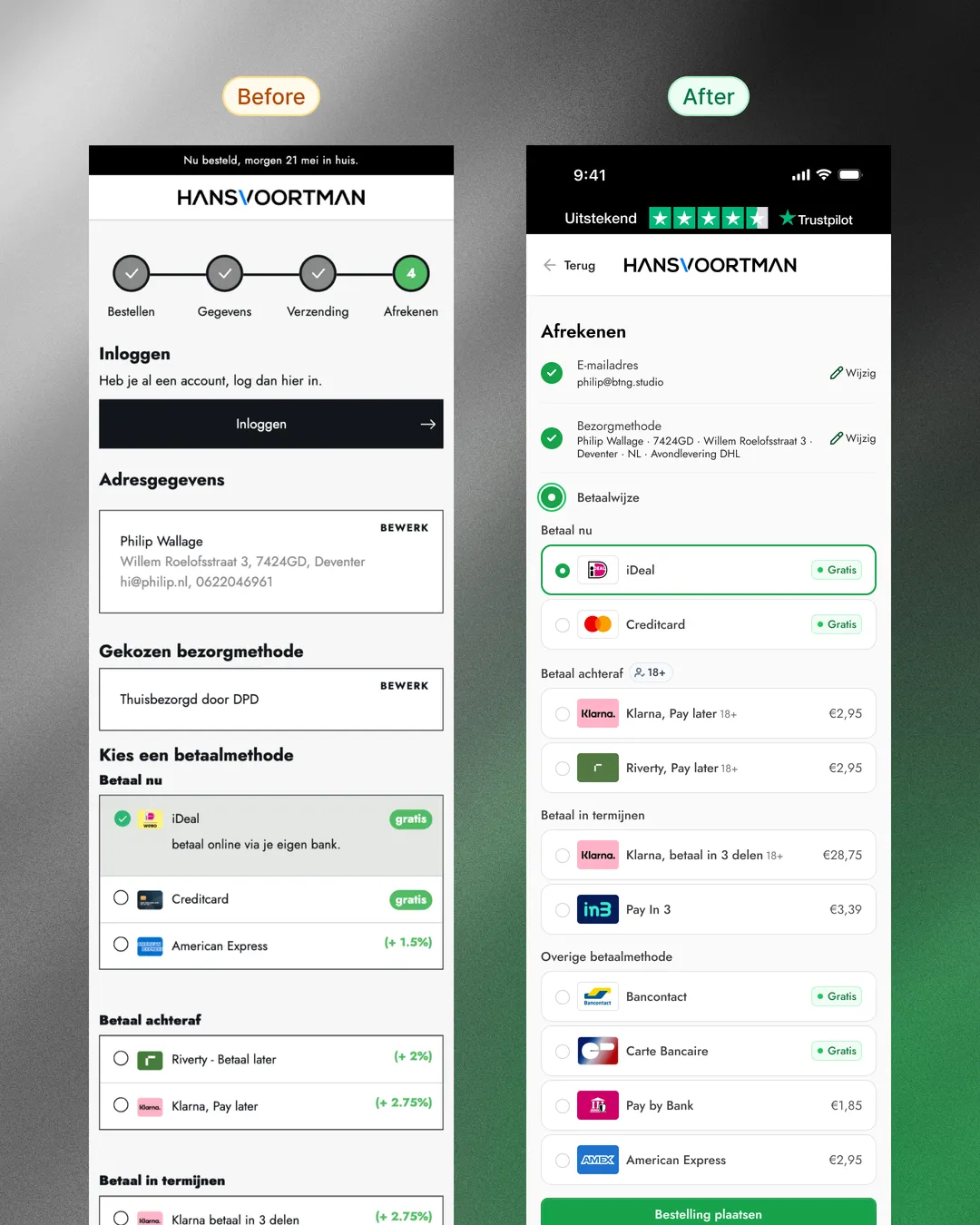
The payment step was the highest-impact leak in the report, and surcharges revealed only on selection were a prime suspect. By surfacing every cost upfront, grouping methods to match how buyers actually think about paying, prioritising iDEAL, and moving age verification off-site so the checkout never asks for a date of birth, we expect a measurable lift in payment-step completion — the metric tied most directly to recovered revenue.
Confirmation — and the right moment to ask
The order is placed. Only now — with the sale secured — does the flow offer account creation, once and gently. The confirmation page is clean: order details, shipping address, a map, a single invoice link and a feedback prompt. This is where the password ask that used to block step one finally belongs.
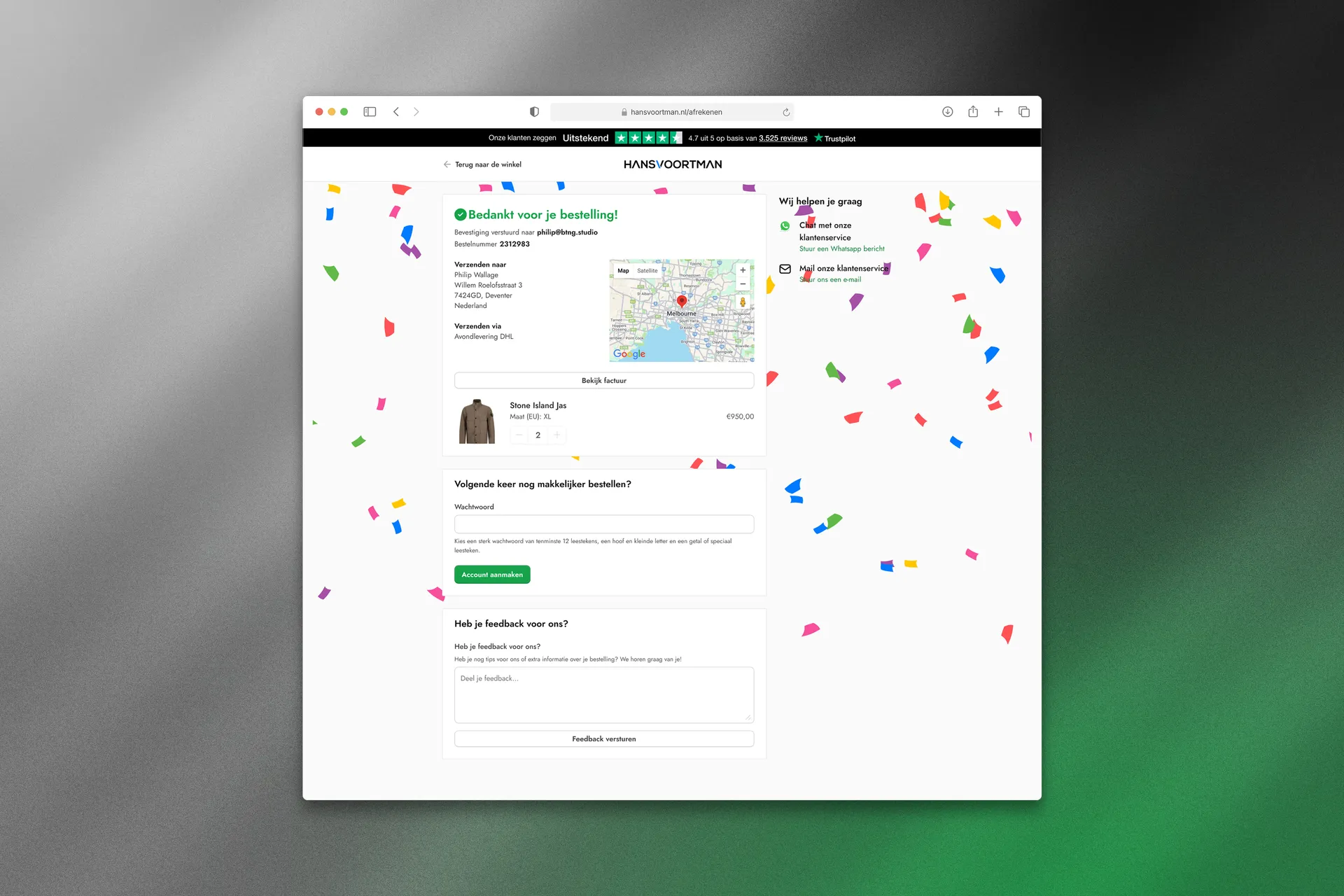
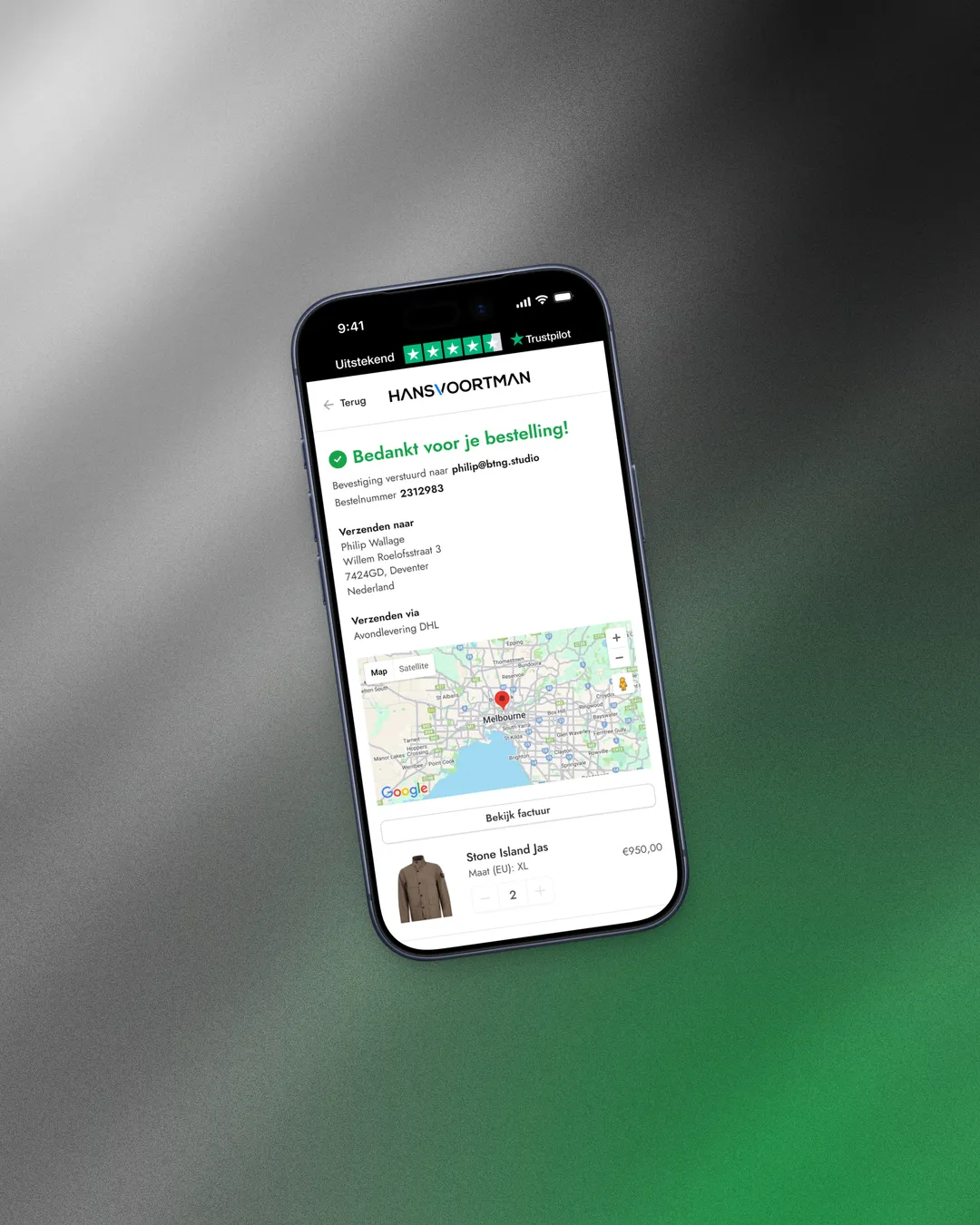
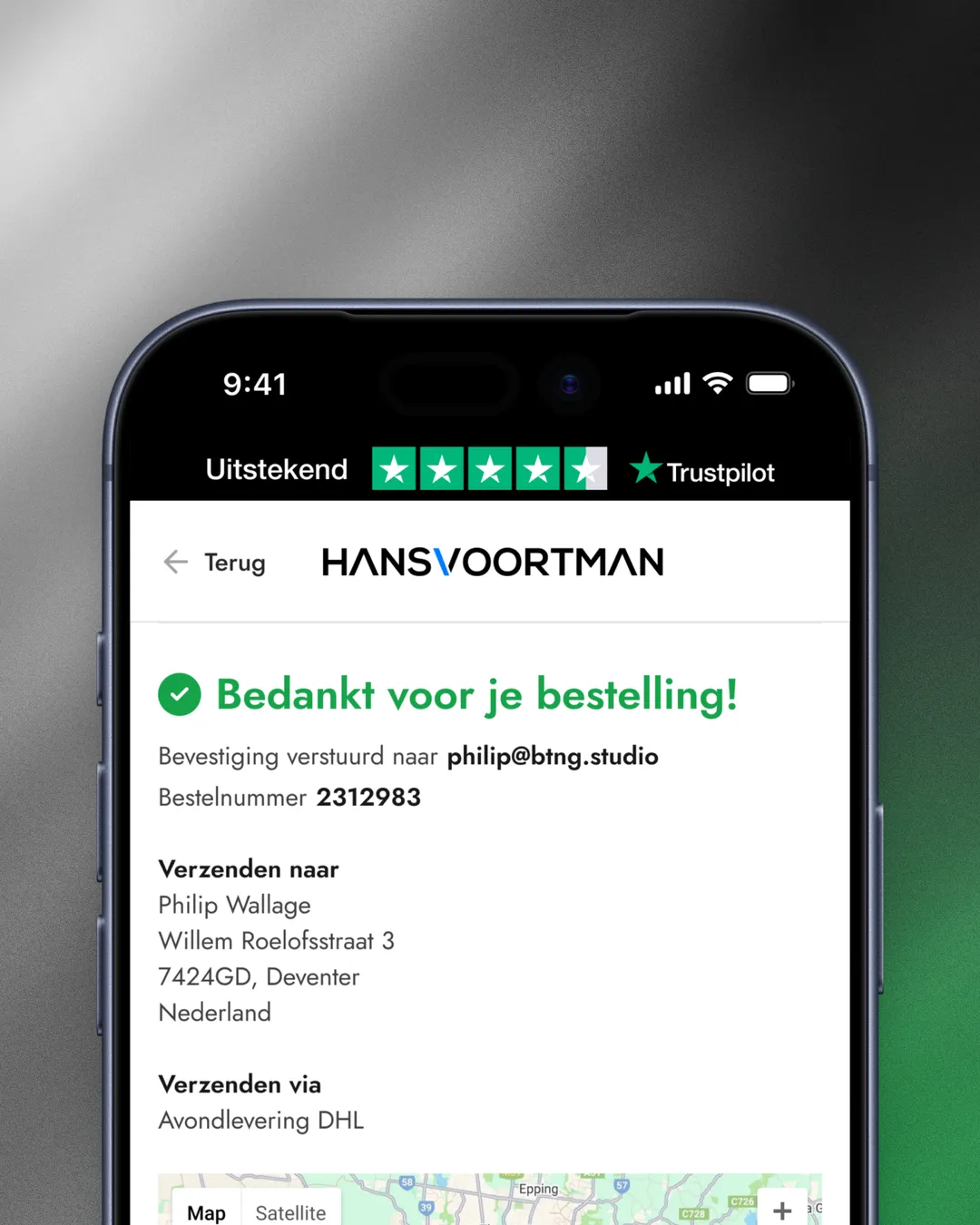
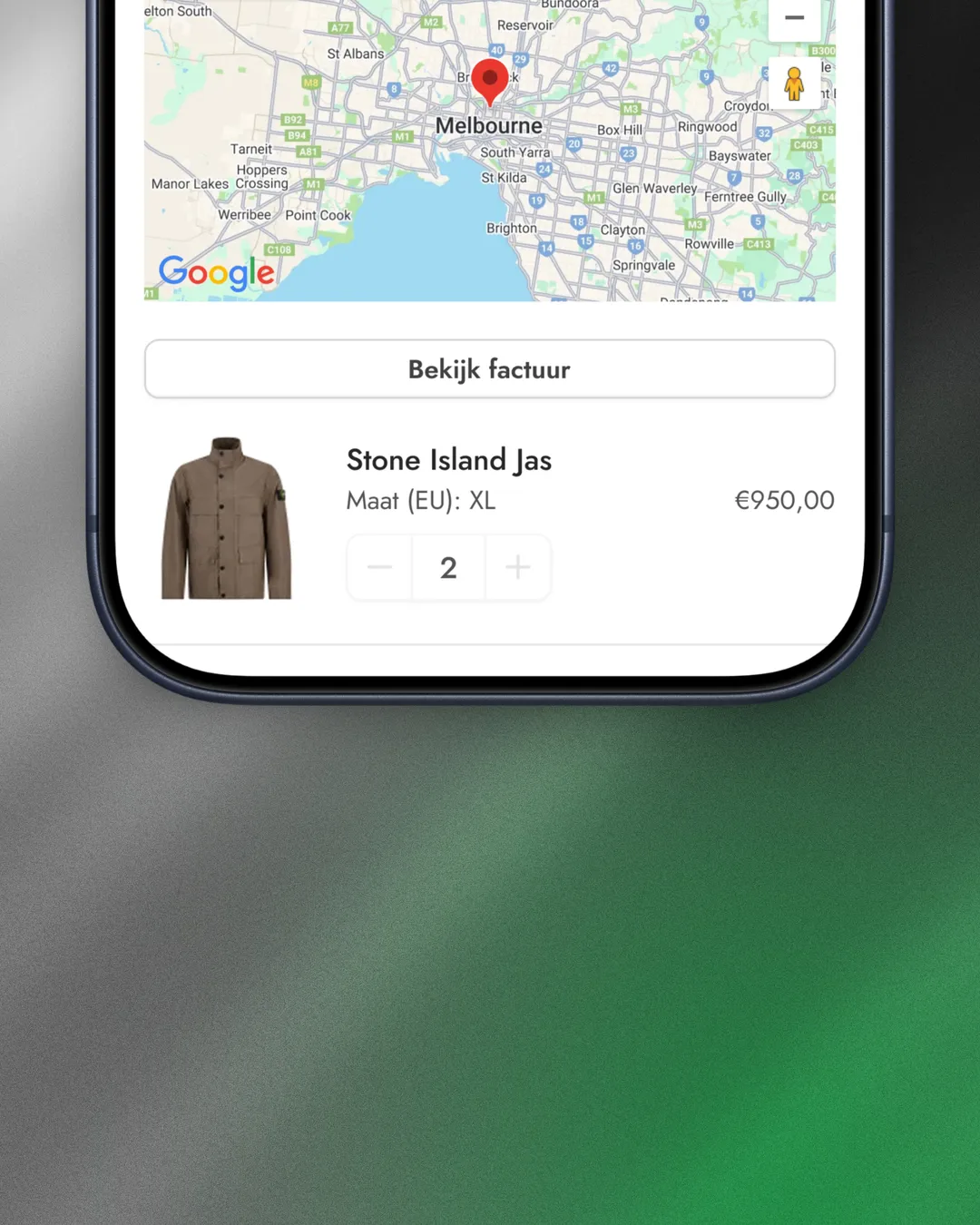
The post-purchase moment is the lowest-risk point to ask for commitment — the sale is already done. Deferring account creation to the thank-you page should recover the sign-ups removed from step one at a higher completion rate, turning a checkout blocker into a painless one-tap option.
What this shows
Research without action is just a report. This engagement went further.
The data identified where the money was going. The redesign shows exactly how to stop losing it. Every decision in the new checkout traces back to a specific finding — a drop in the funnel, a pattern in the session recordings, a benchmark that wasn't being met.
That's the difference between knowing you have a problem and knowing how to fix it.
"Philip redesigned our checkout, and the collaboration was a pleasure from start to finish. It was clear early on that he understood the brief, and he translated it into a structured, easy-to-follow approach. Throughout the project he kept us involved with short video updates explaining his decisions and showing how things were evolving. That made everything clearer and let us give focused feedback exactly when it was needed. The final design is visually strong and logically built, which made it straightforward to implement in our environment."

Want to know what your store's data is hiding?
Book a call